
Comparisons & Guides, Safety & Regulations
Braked vs Unbraked Trailers in South Africa: What You Need to Know
Feb
When buying, building, or upgrading a trailer, one of the most important decisions you’ll make is whether to choose a braked or unbraked trailer.
Understanding the difference is not just about performance — it’s about legal compliance, safety, and protecting your investment.
In this guide, we explain everything South African trailer owners need to know.
What Is an Unbraked Trailer?
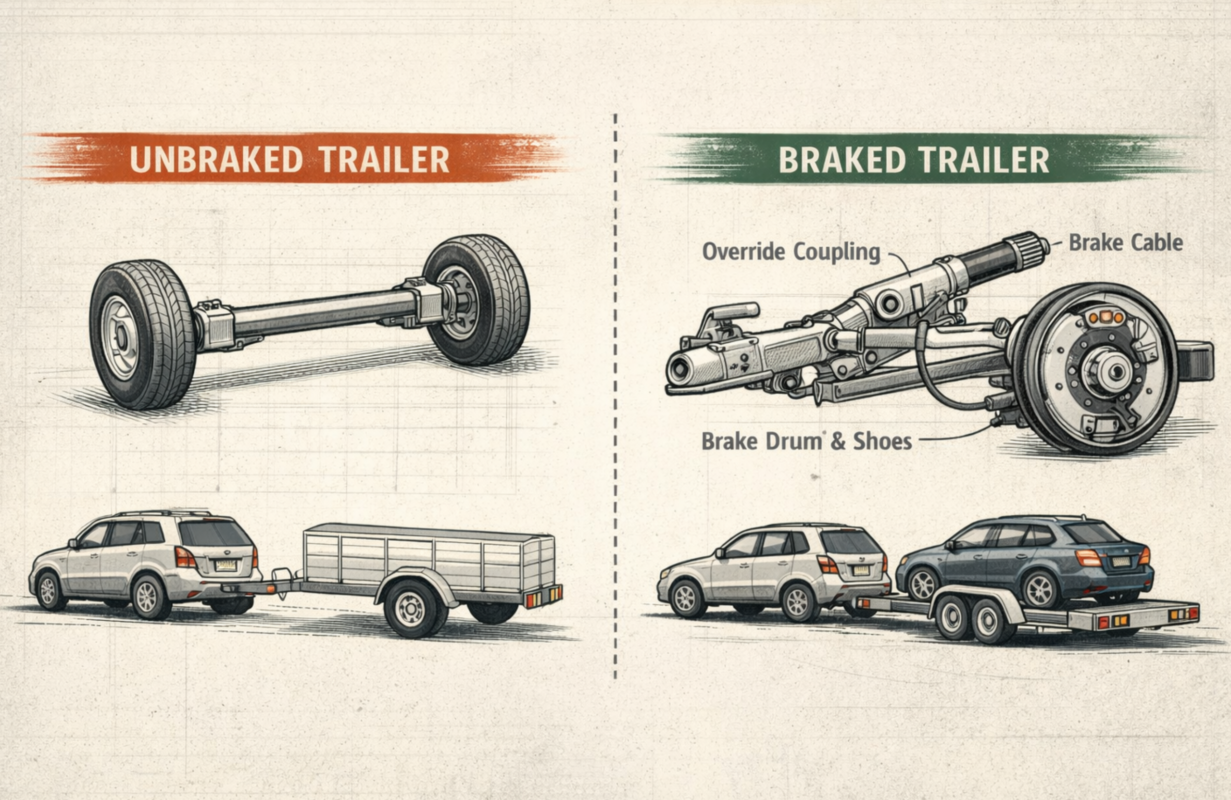
An unbraked trailer does not have its own independent braking system. It relies entirely on the towing vehicle to stop both the vehicle and the trailer.
✔ Common Uses:
- Small utility trailers
- Garden refuse trailers
- Light cargo trailers
✔ Legal Limit in South Africa:
Unbraked trailers are generally limited to 750kg GVM.
Anything above this weight legally requires a braking system.
✔ Advantages:
- Lower cost
- Less maintenance
- Simer mechanical system
❌ Limitations:
- Longer stopping distances
- Increased wear on towing vehicle brakes
- Not suitable for heavy loads
What Is a Braked Trailer
A braked trailer has its own braking system, typically activated through an override coupling system.
When the towing vehicle slows down, the trailer automatically applies its own brakes.
✔ Required For:
- Trailers over 750kg GVM
- Agricultural trailers
- Equipment trailers
- Car trailers
- Construction trailers
✔ Benefits:
- Improved safety
- Shorter stopping distances
- Better load control
- Reduced strain on the towing vehicle
Override Brake Systems Explained
Most braked trailers in South Africa use an override braking system.
When the towing vehicle decelerates:
- The trailer pushes forward slightly.
- The override coupling compresses.
- The system activates the trailer brakes.
This simple mechanical system is reliable and widely used in South African trailers.
When Should You Upgrade to a Braked Trailer?
Consider upgrading if:
- Your loads frequently exceed 750kg
- You tow on highways regularly
- You operate on farms with uneven terrain
- You transport machinery or heavy equipment
Even if your trailer is close to the legal limit, upgrading improves safety significantly.
Safety and Legal Compliance in South Africa
To remain compliant:
- Ensure your trailer’s GVM is correctly plated
- Use the correct rated coupling
- Maintain working brake cables and linkages
- Check wheel bearings regularly
- Inspect brake shoes and drums
Failure to maintain your braking system can result in fines or roadworthy failures.
Common Signs Your Trailer Brakes Need Attention
Watch out for:
- Trailer pushing vehicle during braking
- Uneven tyre wear
- Grinding or squeaking sounds
- Loose or stretched brake cables
- Weak stopping performance
Routine inspections prevent costly breakdowns.
Final Thoughts
Choosing between a braked and unbraked trailer is about more than price — it’s about safety, legality, and performance.
If you are unsure which setup is right for your trailer, speak to a qualified trailer parts supplier who understands South African regulations and operating conditions.
